
My very first job as a virtual assistant, I had a time tracker installed on my computer.
Every twenty minutes, it would pop up. Take a screenshot. Log what I was doing. Send it somewhere — to someone — who would look at it later as evidence that I had, in fact, been working.
I remember the feeling of it. Not the software itself, but what it said underneath the software. We don't trust you. Prove it. Again. Every twenty minutes. Forever.
I worked that way for a long time. Long enough that it started to feel normal. Long enough that I forgot it was possible to work any other way.
Then I joined MailerLite.
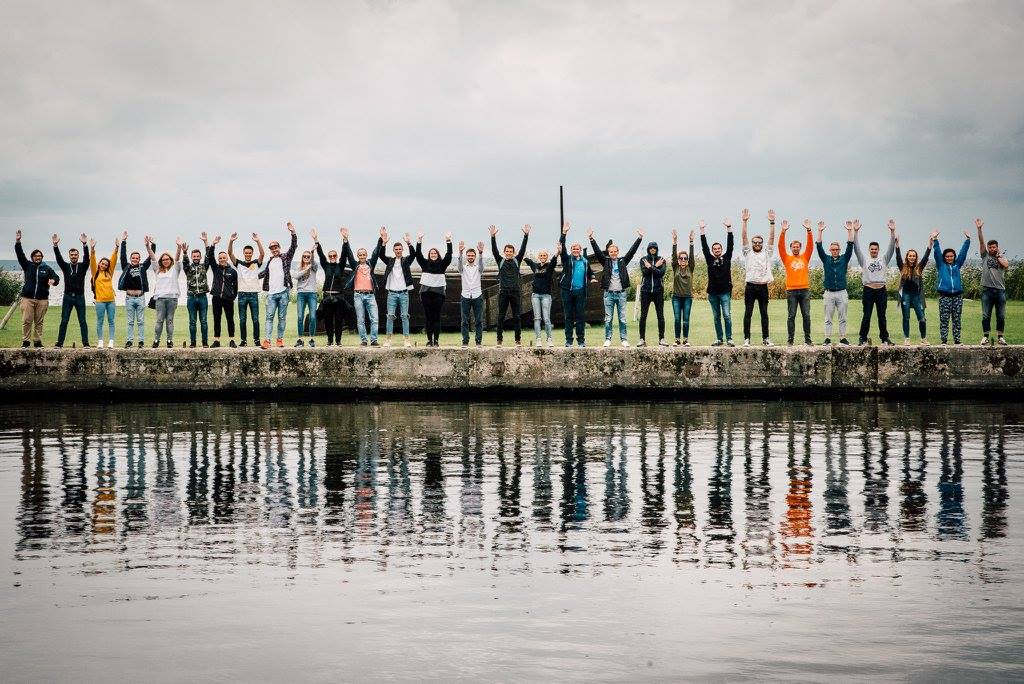
My first weeks there looked nothing like that first VA job — but not in the way you might expect.
There was a structured onboarding. A buddy assigned to help me find my footing. A manager who walked me through everything, answered every question, and made sure I understood not just the tools but the culture underneath them. It was warm, deliberate, and thorough.
And then, about a month in, something shifted.
Not abruptly. Organically. The hand-holding eased. The check-ins became less frequent. What remained was open communication on Slack — available when I needed it, but not hovering. Not watching. Not demanding I prove, every twenty minutes, that I was still there.
The first time I noticed the shift, I sat with it for a moment trying to name what I was feeling.
Trusted. I felt trusted.
It sounds simple. It wasn't. After years of building trust by performing visibility — by being responsive, by being present, by being seen — to suddenly be trusted as a starting position rather than a destination? That was quietly disorienting. And then it was quietly transformative.
Not trusted because I'd proven it. Trusted because that's where they chose to begin.
MailerLite had been building a remote-first culture since 2014. Not because a pandemic forced them to — because their founders believed, deliberately and philosophically, that the office is not where the best work happens. By the time I joined as a Customer Support Manager, this wasn't a policy on an HR page.
It was the air across 40+ countries where the team was scattered, working asynchronously, without anyone looking over anyone's shoulder.
Here's what that experience rewired in me — and what I've been building with ever since.
Lesson 1: Trust wasn't earned. It was the starting position.
Most companies hand out trust the way they hand out promotions: slowly, conditionally, after you've proven you deserve it. You earn it by showing up early, staying late, responding before you've had time to think. Visibility is the currency. The time tracker is just the most honest version of that belief system.
MailerLite flipped it. Trust was the default — built into the onboarding, present in the buddy system, sustained through open Slack channels after the structured start faded. You were given ownership of your work, autonomy over how you did it, and the quiet expectation that you'd deliver. Not because someone was watching. Because you were a professional who wanted to do good work.
Trust as something to earn:
People learn to look trustworthy. They attend meetings they have nothing to add to. They stay visible because visibility is the currency.
Trust as a starting position:
All of that falls away. The only question left is: is the work good?
That's not a subtle shift. That's a completely different company — and a completely different experience of going to work.
Lesson 2: The quietest teams think the deepest.
The best communication at MailerLite happened slowly. Meetings were rare, short, and existed for a clear reason. Most communication happened in writing, at a time that worked for the person receiving it — not the person sending it.
Coming from environments where responsiveness meant immediacy, where a Slack message expected a reply within minutes, this took adjustment. I kept reaching for the loop-in. The quick check. Not because I needed it — because I'd been trained to perform it.
What I eventually understood was that the open Slack culture at MailerLite wasn't the absence of communication. It was a better version of it. Available when it mattered. Not generating noise when it didn't.
Every unnecessary ping demanding an immediate response, every tool creating the expectation of constant availability — that's a tax on deep work. MailerLite refused to pay it. And the work was better for it.
I carried this into Creative Dash. Our clients don't hear from us every day. They get one structured update on Friday that tells them everything that matters. That's not less communication.
That's respect for their time, expressed as a system.
Lesson 3: Connection doesn't die without an office. It just has to be chosen.
The strongest argument against remote work is the hardest to dismiss: without physical proximity, the human texture dissolves. The hallway conversations. The lunch-table ideas. The small moments that build something between people who are more than just a name in a thread.
MailerLite didn't pretend Slack could replace that. Instead, they made connection intentional.
Once a year, the entire global team gathered for a workation. A different country each time. No corporate retreat structure, no keynote speakers. Just the team — people who'd been collaborating across time zones for months — in the same place, sharing meals, having conversations that had nothing to do with deadlines.
I remember sitting across from people I'd only known through documentation and async messages — teammates from different continents, different time zones, whose entire working relationship with me had existed through a screen.
They were exactly who I understood them to be. Not strangers made familiar. People made real.
That's what intentional connection does. It doesn't build the relationship from scratch. It confirms what was already there. The trust had been established through the work. The gathering just gave it a face.
Remote work doesn't mean isolated work. It means the relationships underneath the work have to be chosen, not left to chance.
Lesson 4: Hierarchy is a substitute for trust.
One of the quietest things I noticed at MailerLite was how flat the structure was. Not flat in a naive, everyone-gets-a-vote way. Flat in the way that actually mattered: good ideas weren't held hostage by seniority. The people closest to the work made decisions about the work. Nobody needed three levels of approval to move.
The default instinct in a growing company is to add layers. More managers. More oversight. More process. Because hierarchy feels like control, and control feels like safety.
But hierarchy is what you build when you don't trust people. When you do trust them — genuinely, operationally, not just on a values page — you need far less of it.
The org chart gets simpler when the trust gets deeper.
Lesson 5: Self-direction is the only skill that can't be trained into someone.
MailerLite didn't just hire for skills. They hired for self-direction — the ability to figure out what needs doing, do it without being told, and raise a problem before it becomes a crisis.
Remote work exposes the gap between people who can manage themselves and people who need to be managed. There is no hiding. No looking busy at a desk. No performing for an audience that isn't watching.
I learned to see this distinction clearly. And I learned that you can teach tools, platforms, and processes to a person who already owns their work. You cannot teach someone to care about outcomes. They either arrive with that, or they don't.
Every specialist on the Creative Dash team is evaluated for this before anything else. Not just whether they can execute — but whether they can own. Can they take responsibility for an outcome without someone hovering? Can they communicate proactively rather than waiting to be asked?
For a company whose entire promise is that the client shouldn't have to manage the people managing their business, this isn't a nice-to-have.
It's the whole thing.
The Creative Dash model — one dedicated Project Manager, a team of trained specialists, a weekly report, zero daily management required — didn't come from a business plan.
It came from watching a Lithuanian startup with no venture capital build a world-class team across 40+ countries. By trusting people from the very first onboarding conversation. By protecting their time like it was a non-renewable resource. By hiring for ownership. By making human connection deliberate instead of accidental.
MailerLite proved something most companies still resist: work is about what gets done. Not where you were sitting when you did it.
The time tracker popped up every twenty minutes to ask if I was still there. MailerLite never asked. They already knew. And building a company where that kind of trust is the standard — for my team and for every client we serve — is the work I'm still most proud of.
Further reading:
Remote: Office Not Required by Jason Fried and David Heinemeier Hansson — the original case for distributed work, still the clearest articulation of why the office is not where the best work happens.
Leaving the Base Camp by Ilma Tiki — MailerLite's co-founder's account of how a Lithuanian startup pioneered remote work and built a global team. Worth reading if you are building an expert-led business.