It sounds playful. It moves fast. And it may be quietly rewriting the rules for every founder, coach, and creator who ever said, "I wish I could build that."
There's a moment — you've had it — where you have an idea so clear, so vivid, so needed, that the only thing standing between you and the world having it is the fact that you don't know how to code.
You describe it to someone technical. They nod. They quote you a timeline. They quote you a price. And just like that, your idea gets smaller.
That moment? It might be over.
What if you could just… describe what you want, and watch it appear?
That's the promise — and the provocation — of Vibe Coding. And depending on who you ask, it's either the most democratizing force in the history of software, or the most dangerous shortcut the tech world has ever taken.
I've spent time digging deep into both sides. Here's what you need to know.
So, What Exactly Is Vibe Coding?
The term was coined on February 2, 2025, when Andrej Karpathy — co-founder of OpenAI and former head of AI at Tesla — posted something on X that stopped the developer world mid-scroll.
"There's a new kind of coding I call 'vibe coding', where you fully give in to the vibes, embrace exponentials, and forget that the code even exists."
— Andrej Karpathy, February 2025
The post hit 4.5 million views almost instantly. By year's end, Collins Dictionary had named "vibe coding" its Word of the Year for 2025. Merriam-Webster listed it as a trending expression. This wasn't a fringe idea. This was a cultural signal.
But what does it actually mean?
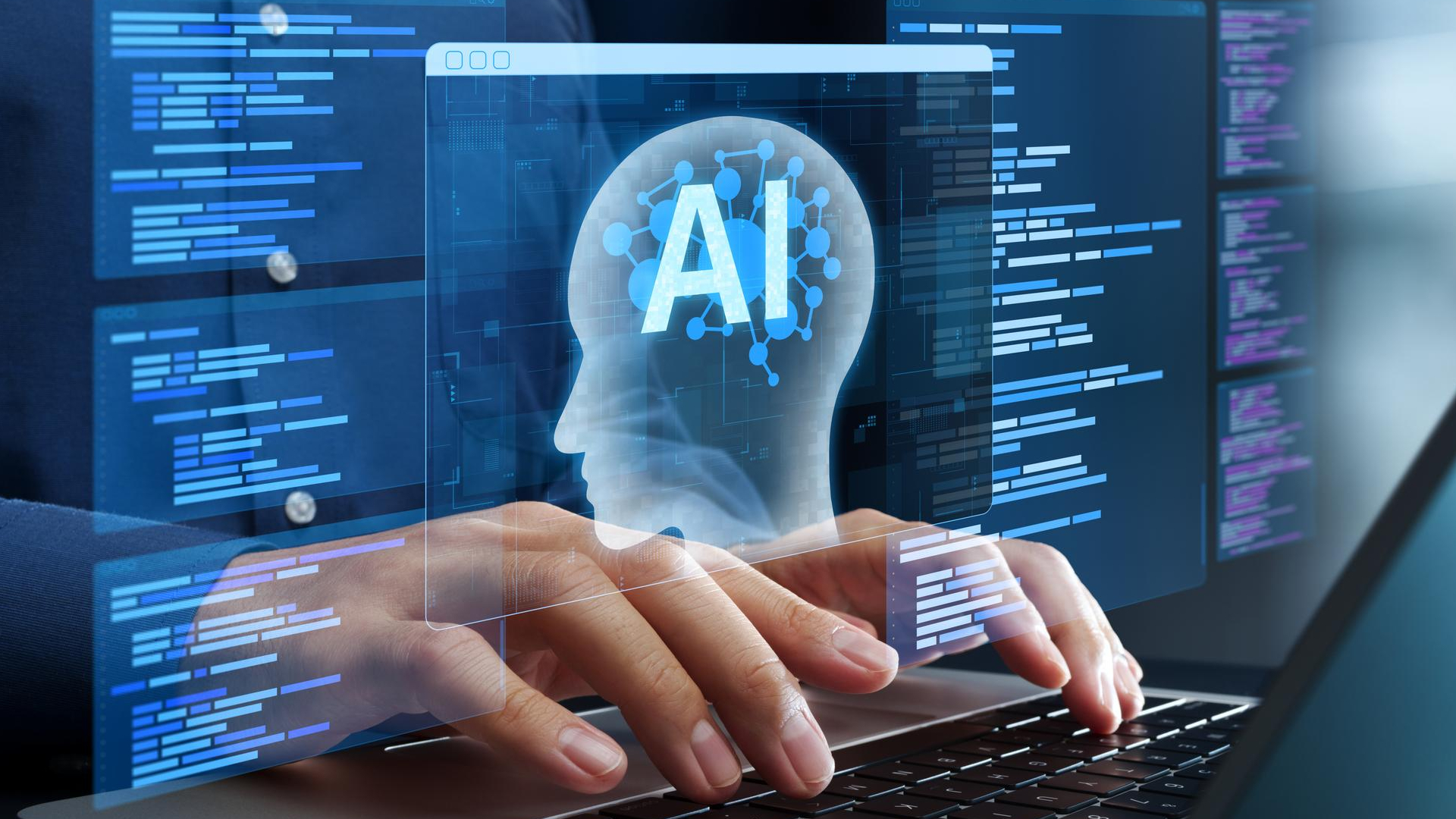
At its core, vibe coding is the practice of using AI tools — think ChatGPT, Claude, GitHub Copilot, Replit's AI Agent — to generate software from plain English descriptions. You don't write the code line by line. You describe what you want, often conversationally, and the AI writes it for you.
You say: "Build me a client intake form that connects to a payment processor and sends a welcome email."
And it does.
Then you run it. You watch what happens. If something breaks or isn't quite right, you describe the fix in plain language again — and you keep going until it works.
No computer science degree required. No years of bootcamp training. Just your idea, your words, and an AI that speaks human.
The Tools Making This Possible
The platforms leading this shift include Replit, Cursor, Lovable, v0 by Vercel, GitHub Copilot, Google AI Studio, and Claude Code — tools built from the ground up for this kind of conversational, iterative development. Replit alone reportedly grew its annual recurring revenue from $10M to $100M in just nine months after launching its AI Agent. Lovable hit $100M ARR in eight months. These numbers don't lie. Demand is real and it is exploding.
25%
of Y Combinator's Winter 2025 startups had codebases that were 95% AI-generated
30%+
of new code at Google is now generated by AI, per CEO Sundar Pichai
$100M
ARR reached by Lovable in just 8 months after launching its vibe coding platform
This isn't a corner-case experiment. This is the mainstream trajectory of how software gets built.
The Case For It: Why People Are Losing Their Minds Over This
Let me tell you what the true believers see — and why their excitement isn't irrational.
THE UPSIDE
The Opportunities
Non-technical founders can build functional prototypes in a weekend — without hiring a dev team
Drastically lowers the cost of experimentation, which accelerates innovation across every industry
Coaches, trainers, and service providers can build their own tools instead of waiting on others
Speed-to-market advantage is now measured in hours, not months
Aligns with agile principles: build first, refine later, learn fast
Voice-to-code tools mean even typing isn't a barrier anymore
Senior developers use it to move faster on complex tasks and reduce repetitive work
The Real Risks
45% of AI-generated code introduced known security vulnerabilities (Veracode 2025 Report)
AI-authored code had 1.7× more major issues than human-written code in a 2025 GitHub study
Over 10% of apps built on Lovable had critical data security flaws — handling real user information
Code nobody fully understands is nearly impossible to fix when it eventually breaks
Junior developers struggle to catch AI mistakes, widening the skill gap
Experienced developers can actually slow down — one study found a 19% increase in task time despite feeling 20% faster
Enterprise adoption is risky without governance frameworks, audits, and security review protocols
Karen Brennan, a professor at Harvard's Graduate School of Education who actually taught a course on vibe coding in late 2025, described its core promise as changing "the economics of experimentation." You can build a thing to understand a thing, and you can do it quickly. That rapid iteration is one pathway to generating more ideas and unlocking creativity.
And she's right. There is something genuinely powerful about removing the barrier between vision and creation.
But here is where it gets complicated.
The Case Against It: The Hangover Is Real
By September 2025, Fast Company was already reporting the "vibe coding hangover" — senior engineers describing "development hell" when tasked with cleaning up and scaling AI-generated codebases. What was built quickly was breaking slowly.
A research analysis of 470 open-source GitHub pull requests found that AI co-authored code contained 1.7 times more major issues than human-written code. Logic errors were more common. Misconfigurations were 75% more frequent. Security vulnerabilities appeared at 2.74 times the rate of human-written code.
The Lovable incident put a human face on the numbers. More than 170 out of 1,645 apps built on the platform — apps handling real user data — had critical row-level security flaws. Any attacker with basic skills could have accessed personal information. The vulnerability earned its own CVE classification.
Raymond Kok, CEO of Mendix, didn't mince words:
"If an LLM wrote every line of your code, but you've reviewed, tested, and understood it all, that's not vibe coding in my book — that's using an LLM as a typing assistant."
— Simon Willison
And programmer Simon Willison offered perhaps the most clarifying distinction in the entire debate:
"Vibe coding in the world of enterprise software is a short-term con with limited long-term gains — until it matures to understand governance, control, and non-functional software requirements."
— Raymond Kok, CEO at Mendix (a Siemens Company)
That line matters. Because the problem was never AI-assisted development. The problem is unreviewed, ununderstood, unaccountable code being shipped to real users — with real data, real stakes, and real consequences.
The tool didn't fail us. We forgot that power requires responsibility. We forgot it every time we've been handed something new.
What This Means For Non-Technical Business Owners
If you're a founder, a coach, a trainer, an agency owner — someone who has ideas that need to become tools, workflows, automations, or client-facing products — here is the honest truth:
Vibe coding has already changed your competitive landscape. Your competitor who used to need a $15,000 custom build can now prototype the same thing in a weekend for next to nothing. The barrier to entry for software has never been lower.
That is simultaneously a massive opportunity and a serious warning.
The opportunity: you can now build internal tools, client portals, onboarding flows, and automation systems you previously couldn't afford. You can test ideas before committing engineering resources. You can move faster than you ever thought possible.
The warning: moving fast without understanding what you're building — especially when you're handling client data, payment information, or personal records — is not a strategy. It's a liability.
The businesses that will win in this new era are not the ones who move fastest. They are the ones who move smartest. Who embrace the tool without becoming reckless with the trust their clients have placed in them.
So Where Does It Actually Stand Right Now?
In January 2026, even Linus Torvalds — the legendary creator of Linux — publicly acknowledged using vibe coding to build a component of a personal project. If Torvalds is doing it, the conversation has officially moved past "is this legitimate?" to "how do we do this responsibly?"
The Wall Street Journal reported in July 2025 that professional software engineers had begun adopting vibe coding for commercial use cases. Tools like Snyk and Semgrep are now standard at the entry point of serious AI-assisted workflows precisely because teams have learned they cannot skip the security review step.
The consensus emerging from the most thoughtful voices in the space looks something like this:
Vibe coding is real. It is accelerating. And the people who will thrive with it are not the ones who blindly ship AI output — they are the ones who develop taste. Who know when to trust the AI's output, when to interrogate it, and when to start over. Who treat the AI as a capable but junior collaborator, not an infallible authority.
The era of pure "just describe it and ship it" may be ending. What's replacing it is something more nuanced — and more powerful.
So Who Should Actually Be Using This — And For What?
Let me put on my Operational Partner hat for a moment. Because the use case conversation is where most people get dangerously vague.
Not every tool is for every person. Not every situation calls for the same approach. And as someone who works inside the operations of coaches, trainers, and scaling agencies every day — I want to give you the map that nobody else is drawing.
If You're a Coach or Trainer
Your power is your methodology. Your genius is your transformation process. Your time is your most finite resource. So the question isn't "can I vibe code?" — the question is "what would I build that would give my clients a better experience or give me back hours every week?"
Here's where it makes sense for you:
1
Client intake forms and onboarding flows
A simple form that captures new client information, triggers a welcome email, and feeds into your CRM. Low stakes. High value. This is exactly where vibe coding earns its place.
2
Resource hubs and student portals
A simple members-only page where clients access worksheets, recordings, and links. Before you pay a developer $3,000 for this, a well-guided vibe coding session might get you 80% there — enough to test whether your clients even use it.
3
Lead generation tools — quizzes, calculators, assessments
"What kind of leader are you?" "Is your business operations-ready?" These are quick, engaging, and perfect for vibe coding because the risk of a wrong answer is a bad user experience — not a data breach.
4
Internal dashboards and trackers
A simple client progress tracker. A content calendar dashboard. A revenue snapshot. Tools just for you and your team, with no client data exposed. This is the sandbox where vibe coding is safest.
The keyword is "simple." The moment it touches money, personal data, or a client's trust — simple is no longer the right word. And neither is vibe coding alone.
If You Run a Scaling Agency
You have more technical exposure than a solo coach. You probably have a team. And that means you have more to lose when something breaks — and more capacity to use vibe coding strategically.
1
Prototyping client deliverables before full builds
Show the client a working concept before your team commits engineering hours. Validate the direction. Avoid expensive pivots. This is one of the smartest uses of vibe coding in an agency context.
2
Eliminating boilerplate on repetitive project types
If your agency builds the same type of funnel or workflow repeatedly, AI can generate the scaffolding while your team focuses on what actually differentiates the work. That's not shortcuts — that's leverage.
3
Internal automation and SOPs in tool form
Turning a manual process into a simple internal tool — a project status checker, a capacity calculator, an onboarding checklist app — is exactly where vibe coding shines inside an ops-mature team.
4
Rapid learning and framework switching
Your developers can use vibe coding to explore new frameworks, test architectural decisions, and get working prototypes to learn from — without committing weeks of production time to a dead end.
Where Nobody Should Use It — Full Stop
Non-Negotiable Boundaries
Payment processing systems — If your clients are handing over their card details, that system needs to be built properly, audited, and PCI compliant. AI-generated payment logic with unreviewed security is not an acceptable foundation for financial transactions.
Systems handling personal or sensitive client data — Health coaching notes. Therapy intake records. Business financial information. The moment personal data enters the picture, governance, permissions, and security review become non-negotiable.
Authentication and login systems — Poorly implemented authentication is one of the most common failure points in AI-generated code. If people are logging in, their security is in your hands. Don't vibe that.
Anything you plan to scale without understanding — A vibe-coded tool that handles 10 users might collapse under 1,000. If growth is the goal, the foundation must be built to hold it. Review it. Understand it. Or hand it to someone who does.
The through-line in all of this is the same. Vibe coding is a tool. Tools don't have values — the person holding them does. Use it with intention. Use it where it belongs. And know, clearly, where it doesn't.
From the Founder's Desk
My Thoughts on All of This
This is where I get personal. As a founder. As a mother of three. As someone who has built a business around helping coaches, trainers, and agencies operate smarter — here's what I actually think about Vibe Coding and what it means for the people I serve.
I'm going to say what a lot of people in the tech space won't say out loud — because they're afraid of sounding like they're against progress.
I'm not against progress. I've built my entire business on helping people operate smarter. But smart and fast are not the same thing. And this conversation about Vibe Coding needs some truth injected into it.
If you don't know the fundamentals, don't do it.
API integrations. Payment gateways. SMTP configurations. Database permissions. These aren't technical jargon — they are the bones of every digital product that handles money, data, and trust. If you don't know what they are, you don't know when the AI has gotten them wrong. And it will get them wrong. Not sometimes. Regularly.
You cannot troubleshoot what you don't understand. You cannot secure what you can't see. And you cannot serve your clients well by building on a foundation you've never inspected.
Vibe Coding is not magic. It's a very fast way to build something you don't fully own.
The AI doesn't carry the consequences. You do. Your name is on the product. Your client's credit card information is in that form. Your reputation sits behind that login page. When it breaks — and it will break — the AI won't be there to fix it. You will.
Speed is not your competitive advantage. Reliability is.
I work with coaches and trainers who pour everything into serving their clients. The last thing they need is a payment gateway that fails mid-launch, a welcome email that never fires, or a client portal that exposes data it shouldn't. The tool looked good in the demo. It fell apart in real life. I've seen it happen too many times.
Every shortcut has a price. The question is who pays it.
Most of the time, it's not you. It's your client. It's the person who trusted you enough to hand over their email address, their credit card, their personal story. They didn't sign up for your learning curve. They paid for your expertise.
Use the tool. But earn the right to use it.
Learn what the tool is doing. Understand the architecture. Know enough about the systems you're building on to recognize when something is wrong. You don't need to be an engineer. But you do need to be a responsible operator.
That's not an argument against Vibe Coding. That's an argument for respect — for your craft, for your clients, and for the technology itself.
The best operators I know don't chase tools. They master systems.
Vibe Coding has a place in the future. But that place is in the hands of people who know what they're building — not just people who are excited about how fast they can build it.
The revolution isn't waiting for permission. The only question is whether you'll meet it with curiosity — or let it pass you by.