Most delegations don't fail at “doing.” It fails before the first task is handed over, and again after the last one is finished.
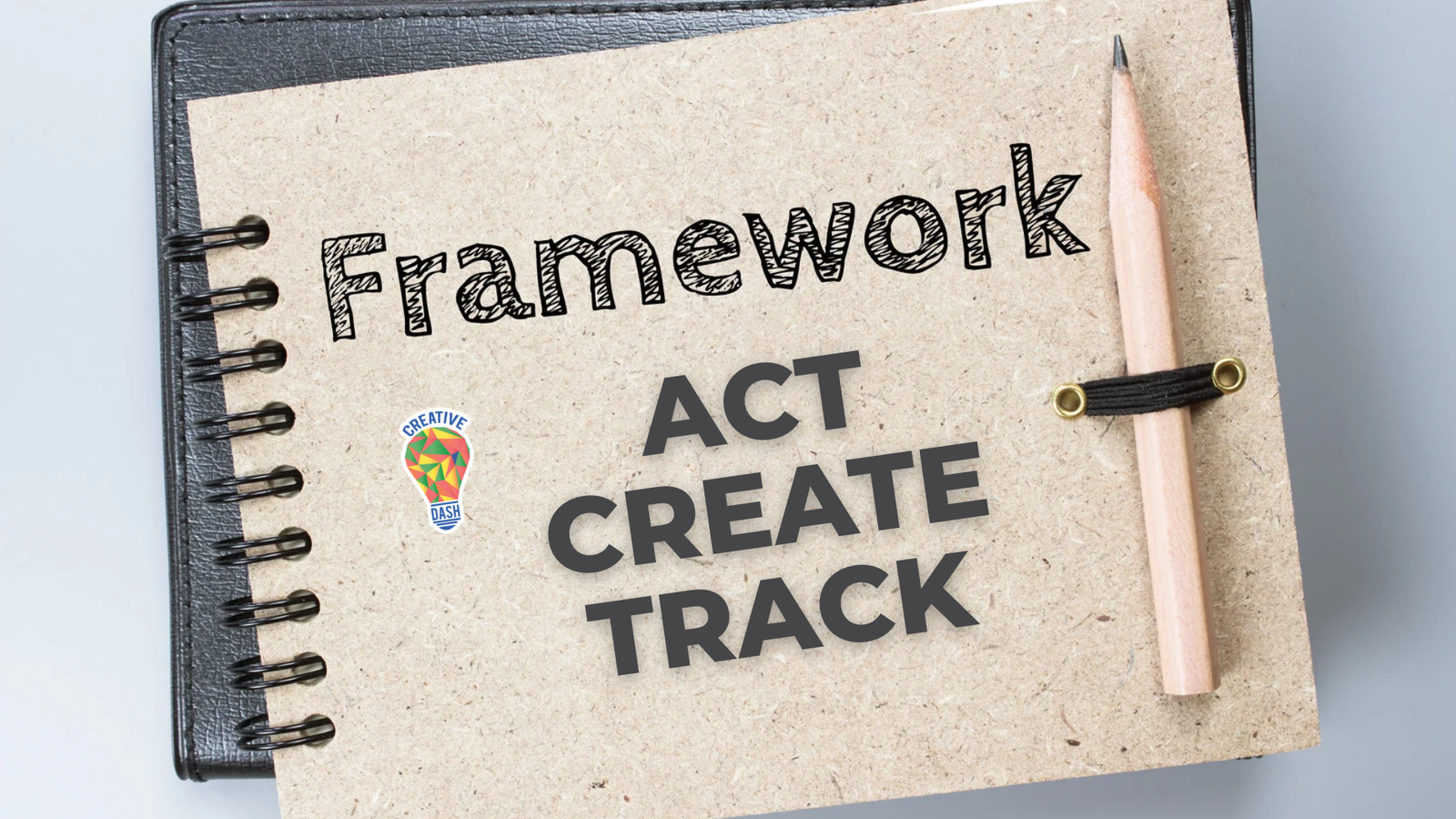
At Creative Dash we use a simple framework to prevent both. We call it A.C.T.: Align, Create, Track. It works whether you are handing work to us, to a team member or to a freelancer, and you can start using it today.
Step 1: Align
Alignment means understanding the goal behind the task, not just the task itself. "Write a newsletter" is a task. "Keep past clients warm so they refer us" is a goal, and it changes what a good newsletter looks like.
At Creative Dash, alignment starts with discovery sessions and continues with regular huddles, so the plan stays connected to what the business needs as it changes.
If you are aligning with a team member or vendor yourself, bring answers to four questions:
- What outcome do you want this work to produce?
- Who is it for, and what should they think or do afterwards?
- What does a good result look like, and what would be a miss?
- How often should you check in, and how?
Thirty focused minutes on these questions saves hours of rework later.
Step 2: Create
Create is the doing: content, workflows, campaigns and the day-to-day work that moves the plan forward. The goal is execution that is both efficient and creative, tailored to the audience you described in the Align step.
The part most people skip is the check before delivery. Every output we produce goes through a quality assurance process before it reaches the client, so you receive finished work rather than a first draft to fix.
Two habits make this step work for any team:
- Keep the work visible. A shared project board lets you see what is in progress and leave feedback in one place.
- Review against the goal, not your taste. Ask whether the work does what you aligned on. That keeps feedback short and specific.
Step 3: Track
"Done" tells you a task is finished. It doesn't tell you whether it worked. Track is where you find out.
We monitor results continuously and adjust, and our clients receive a monthly report with performance updates, so they always know where things stand without having to ask.
A useful monthly report answers three questions:
- What was delivered this month?
- What moved, and by how much?
- What should we keep, change or stop next month?
The third question is the most valuable. It turns last month's results into next month's plan, and it takes you back to Align with better information.
What happens when a step is skipped
The three steps depend on each other. Here is what tends to show up when one is missing, and the quickest fix.
| Skipped step | What you see | Quickest fix |
| Align | Rework, and feedback like "this isn't what I meant" | A 30-minute conversation about the goal before the next task |
| Create | Drafts that need heavy editing before they are usable | A quality check against the agreed goal before delivery |
| Track | Guesswork about whether anything is working | A short monthly review of what was delivered and what moved |
Try it this week
Choose one task or project you are about to hand off. Before you do, write two sentences on the goal (Align). Decide how the work will be checked before it reaches you (Create). Then put a date in your calendar to review what happened (Track).
If you would like a partner who already works this way, we start every engagement with the A.C.T. framework. Book a free discovery call or email team@creative-dash.com and we'll talk through your goals.
About the Author:
Gwenn Doria, CLDP®, is an operations and marketing strategist with 15+ years in the trenches of the world’s most successful expert-led brands. With a career forged at industry giants like ClickFunnels, MailerLite and Appsumo, Gwenn identified a fatal pattern: brilliant experts failing to scale because their infrastructure couldn't keep pace with their velocity.
She founded Creative Dash to bridge this "scaling gap"—the point where consultants and agency owners hit a wall because their back-end can no longer support their front-end success. Gwenn installs the operational architecture required to turn raw momentum into a sustainable, scalable legacy.